For decades, passwords have been the keys to our digital lives. We use them to access email accounts, bank accounts, social media platforms, shopping websites, and countless other online services. Yet despite their importance, passwords have always had one major flaw—they rely on humans.
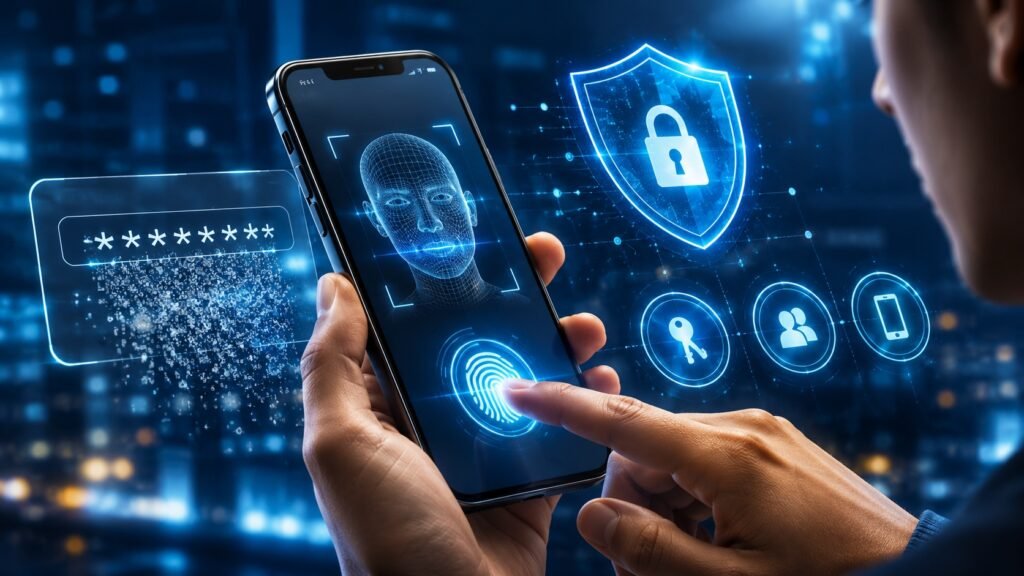
People create weak passwords, reuse the same password across multiple websites, forget them frequently, or fall victim to phishing scams. As cybercriminals become more sophisticated, traditional passwords are increasingly seen as one of the weakest links in digital security.
Now, a growing number of technology companies believe the future is passwordless. Industry experts predict that within the next five years, many internet users could log in to their accounts without ever typing a password again.
So what will replace passwords, and why is the technology industry moving in this direction?
The Growing Problem With Passwords
Most people have dozens, if not hundreds, of online accounts. Remembering unique, complex passwords for every service is nearly impossible.
As a result, users often:
- Reuse passwords across multiple websites.
- Create easy-to-guess passwords.
- Store passwords in insecure places.
- Click on fake login pages designed to steal credentials.
Cybercriminals take advantage of these habits through phishing attacks, data breaches, malware, and credential-stuffing attacks.
Every year, millions of usernames and passwords are exposed through security breaches. Once stolen, these credentials can be used to access personal information, financial accounts, and sensitive business data.
The problem has become so widespread that many cybersecurity experts believe passwords themselves are the issue.
Enter the Passwordless Future
Instead of relying on something you know, such as a password, modern authentication systems increasingly rely on something you have or something you are.
This includes:
- Fingerprint recognition
- Facial recognition
- Device-based authentication
- Security keys
- Passkeys
These methods make it significantly harder for criminals to gain unauthorized access.
The goal is simple: eliminate the need for users to remember and manage passwords altogether.
What Are Passkeys?
Passkeys are widely considered the most likely replacement for traditional passwords.
A passkey is a secure digital credential stored on a trusted device such as a smartphone, tablet, or computer.
When you log in to a website or app, your device verifies your identity using:
- Fingerprint scanning
- Face recognition
- Device PIN
- Biometric authentication
Behind the scenes, advanced cryptographic technology confirms your identity without transmitting a traditional password over the internet.
Because there is no password to steal, many common cyberattacks become ineffective.
Why Technology Companies Are Embracing Passkeys
The world’s largest technology companies have already started supporting passwordless authentication.
Their reasons are straightforward:
Better Security
Traditional passwords can be guessed, stolen, or leaked.
Passkeys use public-key cryptography, which significantly reduces these risks.
Easier User Experience
Most people dislike creating and remembering passwords.
Logging in with a fingerprint or face scan is faster and more convenient.
Reduced Phishing Attacks
Fake login pages often trick users into entering passwords.
Since passkeys do not require users to type credentials, phishing attacks become much less effective.
Lower Support Costs
Password resets are one of the most common customer support requests.
Passwordless systems dramatically reduce these costs.
How Biometric Authentication Is Changing Security
Biometric authentication has become increasingly common in recent years.
Many smartphones already allow users to unlock devices using:
- Fingerprints
- Face recognition
- Iris scanning
Biometrics offer several advantages:
Convenience
Users don’t need to remember anything.
Speed
Authentication often takes less than a second.
Security
Biometric data is difficult to replicate compared to passwords.
However, biometrics are not perfect.
Experts caution that biometric systems must be implemented carefully to protect user privacy and prevent misuse.
Are Passwords Really Going Away?
Not entirely—at least not immediately.
The transition to passwordless authentication will likely happen gradually.
Many organizations still rely on legacy systems built around traditional passwords.
For the foreseeable future, users may encounter a mix of:
- Passwords
- Multi-factor authentication (MFA)
- Passkeys
- Biometrics
- Hardware security keys
Over time, passwords may become a backup option rather than the primary method of authentication.
The Rise of Multi-Factor Authentication
While the world moves toward passwordless systems, multi-factor authentication remains one of the most effective security tools available today.
MFA requires users to verify their identity using multiple methods, such as:
- A password
- A smartphone verification code
- A fingerprint scan
Even if a criminal obtains one factor, they still need the others to gain access.
Many cybersecurity experts recommend enabling MFA on every important account.
Could Passwordless Technology Create New Risks?
No security system is completely immune to threats.
Passwordless authentication introduces new challenges, including:
Device Dependence
Users may become heavily reliant on their phones or computers.
Privacy Concerns
Biometric systems require careful handling of sensitive personal data.
Recovery Challenges
Account recovery processes must remain secure if users lose their devices.
Technology companies are actively working to address these concerns through secure backup methods and encrypted storage systems.
What the Future Might Look Like
Imagine opening your banking app without typing a password.
You simply look at your phone.
Your face is recognized.
Within seconds, you’re securely logged in.
No passwords.
No password resets.
No forgotten credentials.
This vision is rapidly becoming reality.
Experts believe that over the next five years:
- More websites will adopt passkeys.
- Passwordless logins will become standard.
- Phishing attacks may decline.
- Biometric authentication will become more widespread.
- Traditional passwords will gradually become less important.
The internet may become both safer and easier to use.
Final Thoughts
Passwords have protected online accounts for decades, but they were never a perfect solution. As cyber threats continue to evolve, the technology industry is searching for stronger and more convenient ways to verify identity.
Passkeys, biometrics, and passwordless authentication systems represent a major shift in how we interact with the digital world. While passwords are unlikely to disappear overnight, their dominance may be coming to an end.
Within the next five years, many people could find themselves logging in with a fingerprint, face scan, or secure device instead of a password. If that happens, one of the internet’s oldest security tools may finally become a thing of the past.