
4. Prioritize Digestive Wellness
In Ayurveda, digestion is considered an important foundation of overall health. Many Ayurvedic routines focus on mindful eating and digestive comfort.
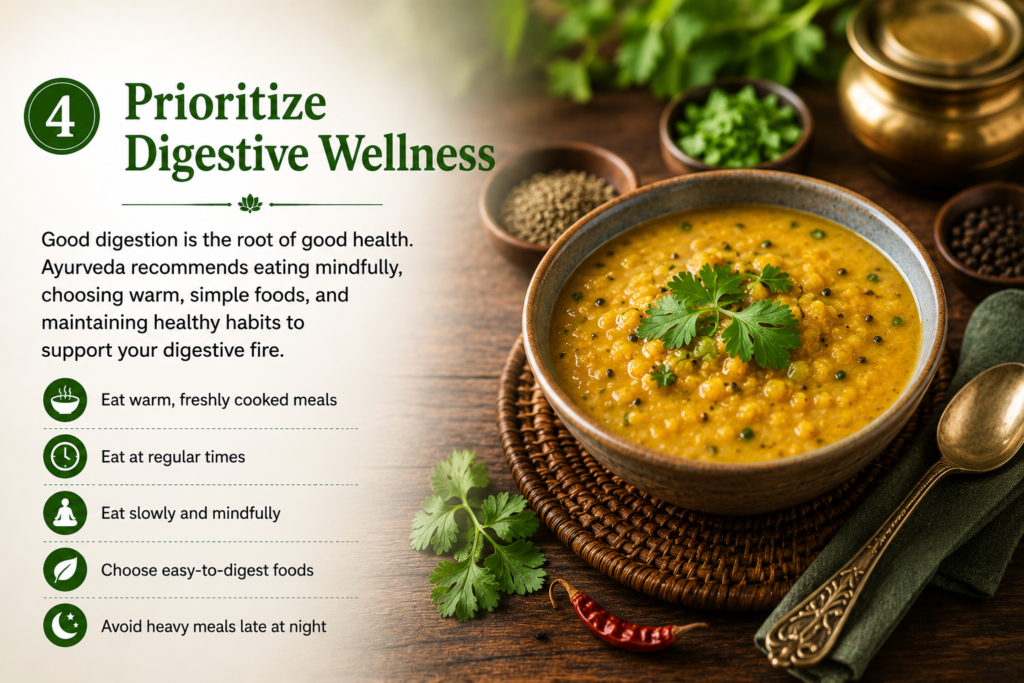
Healthy Eating Habits Inspired by Ayurveda
Eat Slowly
Eating too quickly may lead to discomfort or overeating. Mindful eating can help people enjoy meals more fully.
Avoid Heavy Late-Night Meals
Many people feel better when dinner is lighter and eaten earlier in the evening.
Include Warm Foods
Traditional Ayurvedic meals often feature warm, freshly cooked foods rather than heavily processed items.
Stay Hydrated
Drinking enough water throughout the day supports general wellness and hydration.
5. Follow a Daily Routine
Ayurveda places great importance on consistency and routine. Traditional teachings suggest that stable daily habits may support better physical and mental balance.

Example of a Balanced Daily Routine
Morning
- Wake up early
- Drink warm water
- Stretch or meditate
- Eat a healthy breakfast
Afternoon
- Eat a balanced lunch
- Stay active
- Take short mental breaks
Evening
- Eat a lighter dinner
- Reduce screen time
- Relax before sleep
Creating a healthy schedule may improve productivity, focus, and overall lifestyle balance.
6. Practice Yoga and Breathing Exercises
Yoga and Ayurveda are closely connected in traditional Indian wellness philosophy.

Yoga combines movement, breathing, and mindfulness practices that many people use today for stress management and flexibility.
Benefits Often Associated with Yoga
People commonly practice yoga to support:
- Flexibility
- Relaxation
- Better posture
- Stress reduction
- Mind-body awareness
Breathing Practices
Breathing exercises, sometimes called pranayama, are also popular in wellness routines.
Simple deep breathing may help people feel calmer and more focused during stressful days.
7. Respect Seasonal Living
Ayurveda teaches that lifestyle habits should change with the seasons. Ancient Indian communities adjusted food choices, clothing, and routines according to weather conditions.
Seasonal Wellness Ideas
Summer
- Stay hydrated
- Eat fresh fruits
- Choose lighter meals
Winter
- Eat warm cooked foods
- Drink herbal teas
- Keep the body warm
Rainy Season
- Focus on hygiene
- Eat freshly prepared foods
- Avoid excessive junk food
Seasonal wellness practices can help people adapt their habits more naturally throughout the year.
8. Improve Sleep Naturally
Quality sleep is an important part of Ayurvedic wellness traditions. Healthy sleep habits support energy, concentration, and emotional balance.
Natural Sleep-Friendly Habits
Create a Relaxing Night Routine
- Reduce bright screens before bed
- Listen to calming music
- Read a book
- Practice meditation
Avoid Heavy Meals Before Sleep
Large meals late at night may affect comfort and rest quality for some individuals.
Maintain Consistent Sleep Timing
Going to bed and waking up at similar times each day may support healthier sleep patterns.
9. Reduce Stress Through Mindfulness
Ancient Indian wellness traditions emphasized mental calmness long before modern stress management became popular.
Ayurvedic-inspired mindfulness practices may include:
- Meditation
- Quiet reflection
- Journaling
- Nature walks
- Gratitude practices
The Importance of Mental Wellness
Modern lifestyles often involve:
- Constant notifications
- Busy schedules
- Long screen time
- Work pressure
Mindfulness habits may help create moments of calm and emotional balance during the day.
10. Choose Natural and Balanced Living
One of the biggest lessons from Ayurveda is moderation and balance. Instead of extreme restrictions, Ayurveda promotes steady healthy habits.
Balanced Living Tips
- Eat whole foods when possible
- Stay physically active
- Spend time outdoors
- Build positive relationships
- Rest when needed
- Avoid excess in daily habits
This balanced approach continues to attract people seeking sustainable wellness practices instead of short-term trends.
Why Ayurveda Is Becoming Popular Again
Interest in natural wellness has increased significantly in recent years. Many people are exploring traditional health philosophies alongside modern healthy lifestyle habits.
Reasons for Ayurveda’s growing popularity include:
- Interest in holistic wellness
- Preference for natural living
- Focus on prevention and lifestyle
- Mindfulness and stress management
- Traditional herbal practices
However, it is important to remember that Ayurveda should not replace professional medical diagnosis or treatment.
Important Safety Note
This article is for educational and informational purposes only. Ayurvedic practices, herbs, and wellness routines are not intended to diagnose, treat, cure, or prevent diseases.
Always consult a qualified healthcare professional before:
- Starting herbal supplements
- Making major dietary changes
- Using wellness remedies during pregnancy
- Combining herbs with medications
Responsible wellness practices are always important.
Simple Ayurveda-Inspired Habits You Can Start Today
If you want to explore Ayurvedic-inspired living, begin with small, manageable habits.
Beginner-Friendly Ideas
- Drink warm water in the morning
- Eat meals at regular times
- Include fresh fruits and vegetables
- Practice 5 minutes of deep breathing
- Reduce late-night screen use
- Sleep on time
- Stay physically active daily
Consistency matters more than perfection.

Final Thoughts
Ayurveda offers timeless wellness wisdom that continues to inspire millions worldwide. Its focus on balance, mindfulness, digestion, natural living, and healthy daily routines makes it highly relevant even in today’s fast-moving world.
These 10 Ayurveda health secrets from ancient India are not about extreme dieting or miracle solutions. Instead, they encourage sustainable habits that may support overall wellness and healthier living over time.
Whether it is drinking warm water in the morning, practicing yoga, eating mindfully, or improving sleep habits, small lifestyle changes can make a meaningful difference in daily well-being.
By combining traditional wisdom with modern awareness and professional healthcare guidance, people can create healthier and more balanced lifestyles for the future.