Belly Dancing vs. Zumba: Which Burns More Calories?

Around The World

How It Transforms Your Body & Mind

Modern daily life keeps most of us glued to desk chairs, staring at screens, and dealing with stiff backs. When it comes to squeezing a bit of fun into our daily routines, traditional gym workouts like treadmill running or repetitive weightlifting can quickly feel like an uninspiring chore.

That’s precisely why dance-based workouts have completely taken over the fitness world. They offer a refreshing way to move your body, sweat out daily stress, and express yourself without feeling like you are doing hard labor.

Two of the most popular dance workouts today are Belly Dancing and Zumba. While both promise a great workout, high energy, and infectious rhythms, they approach fitness, calorie burn, and body movement from very different angles.

If you are torn between shaking your hips in a classic belly dance studio or stepping to the fast-paced Latin beats of a Zumba class, this guide breaks down everything you need to know. We’ll analyze calorie burn, muscle engagement, posture correction, and how these workouts shape your overall self-confidence.

Belly Dancing vs. Zumba — The Great Calorie Burn Breakdown

When choosing a new workout routine, calorie burn is often the first metric people look at. However, understanding how your body burns those calories can completely change your fitness strategy.

What is Zumba?

Created in the 1990s, Zumba is a high-energy cardio dance program inspired by Latin and international music. It blends fast and slow rhythms with basic choreography involving salsa, merengue, reggaeton, and cumbia.

  • Workout Style: High-Intensity Interval Training (HIIT) disguised as a dance party.
  • Primary Focus: Cardiovascular endurance, heart health, and high calorie burn.

What is Belly Dancing?

Belly dancing (traditionally known as Raqs Sharqi) is one of the world’s oldest dance forms, originating in the Middle East. Unlike modern aerobic workouts, it relies on precise body isolations—moving one part of your torso or hips while keeping the rest of your body completely still.

  • Workout Style: Low-impact, isometric muscle conditioning and mobility work.
  • Primary Focus: Core stability, muscle control, joint flexibility, and graceful body awareness.
The Numbers: How Many

… Read More

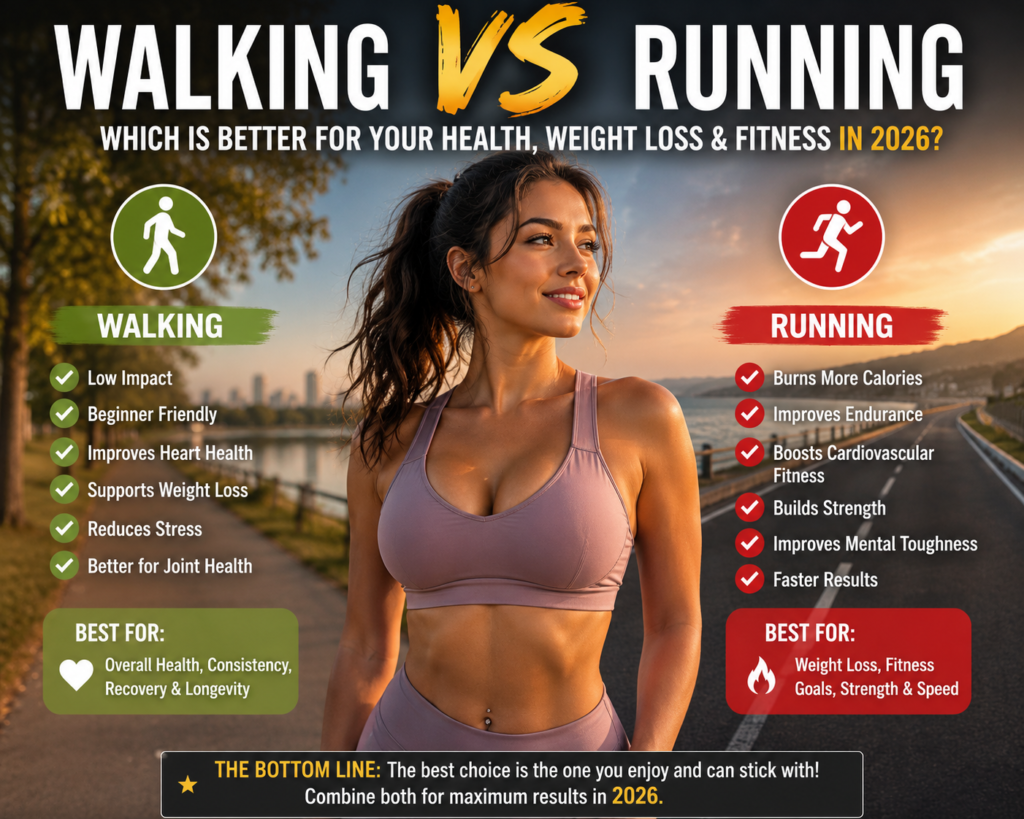
Walking vs Running – Which Is Better for Your Health, Weight Loss, and Fitness in 2026?

In today’s fast-moving digital world, staying healthy has become more important than ever. Millions of people are searching for simple and effective ways to improve fitness, burn calories, lose weight, and maintain mental peace. Among the most popular fitness activities, walking and running continue to dominate because they are easy, affordable, and require no expensive gym membership.

But the biggest question remains: walking vs running — which is actually better?

The answer is not as simple as choosing one over the other. Both walking and running provide incredible health benefits, but they serve different goals depending on your fitness level, body condition, lifestyle, and personal preferences.

Some people choose walking because it feels gentle, relaxing, and sustainable. Others prefer running because it burns calories faster and improves endurance quickly. Fitness experts, online fitness coaching programs, and personal fitness trainers often recommend both activities based on individual health goals.

Understanding Walking

Walking is one of the oldest and most natural forms of exercise. It is low-impact, easy for beginners, and suitable for almost every age group. Even a 30-minute daily walk can improve your physical and mental health significantly.

Walking does not put excessive pressure on the joints, making it ideal for seniors, beginners, overweight individuals, or people recovering from injuries. It also supports long-term consistency because it feels less exhausting compared to high-intensity workouts.

Benefits of Walking

1. Excellent for Beginners

If you are starting your fitness journey, walking is one of the safest options. You do not need advanced equipment, expensive shoes, or a professional trainer to begin. A comfortable pair of walking shoes and consistency are enough.

2. Supports Weight Loss

Many people underestimate walking for weight loss. However, regular brisk walking can help burn calories effectively, especially when combined with a healthy diet plan and calorie deficit.

Walking also improves metabolism and helps the body use fat as energy over time.

3. Better Joint Health

Running may feel difficult for … Read More