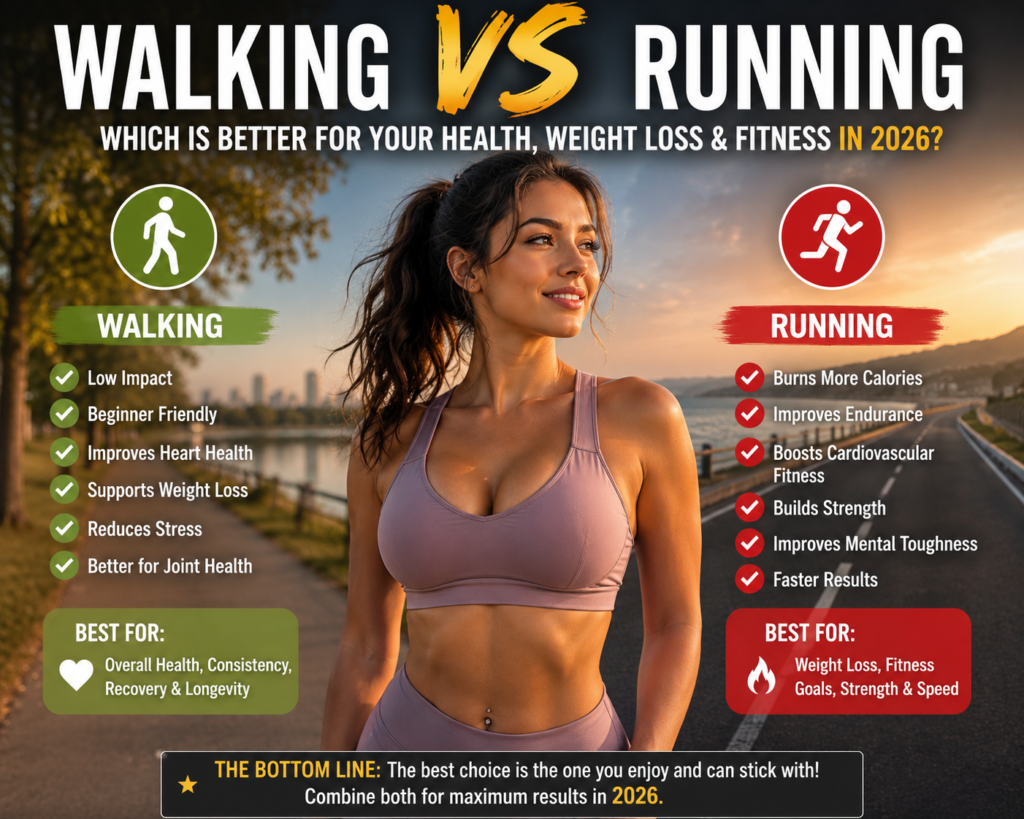
Walking vs Running – Which Is Better for Your Health, Weight Loss, and Fitness in 2026?

Walking vs Running – Which Is Better?

In today’s fast-moving digital world, staying healthy has become more important than ever. Millions of people are searching for simple and effective ways to improve fitness, burn calories, lose weight, and maintain mental peace. Among the most popular fitness activities, walking and running continue to dominate because they are easy, affordable, and require no expensive gym membership.

But the biggest question remains: walking vs running — which is actually better?

The answer is not as simple as choosing one over the other. Both walking and running provide incredible health benefits, but they serve different goals depending on your fitness level, body condition, lifestyle, and personal preferences.

Some people choose walking because it feels gentle, relaxing, and sustainable. Others prefer running because it burns calories faster and improves endurance quickly. Fitness experts, online fitness coaching programs, and personal fitness trainers often recommend both activities based on individual health goals.

Understanding Walking

Walking is one of the oldest and most natural forms of exercise. It is low-impact, easy for beginners, and suitable for almost every age group. Even a 30-minute daily walk can improve your physical and mental health significantly.

Walking does not put excessive pressure on the joints, making it ideal for seniors, beginners, overweight individuals, or people recovering from injuries. It also supports long-term consistency because it feels less exhausting compared to high-intensity workouts.

Benefits of Walking

1. Excellent for Beginners

If you are starting your fitness journey, walking is one of the safest options. You do not need advanced equipment, expensive shoes, or a professional trainer to begin. A comfortable pair of walking shoes and consistency are enough.

2. Supports Weight Loss

Many people underestimate walking for weight loss. However, regular brisk walking can help burn calories effectively, especially when combined with a healthy diet plan and calorie deficit.

Walking also improves metabolism and helps the body use fat as energy over time.

3. Better Joint Health

Running may feel difficult for people with knee pain or obesity. Walking puts less stress on the body and helps maintain mobility without causing excessive joint strain.

4. Improves Mental Health

Walking outdoors can reduce stress, anxiety, and mental fatigue. Nature walks, morning walks, and evening walks improve mood and increase dopamine levels naturally.

5. Easy to Maintain Daily

One of the biggest advantages of walking is sustainability. Most people can continue walking for years without burnout.

Understanding Running

Running is a high-intensity cardiovascular exercise that improves stamina, endurance, calorie burn, and cardiovascular health rapidly. Many athletes, fitness influencers, and fat burning workout programs recommend running for fast fitness transformation.

Running activates multiple muscle groups, strengthens the lungs, and improves heart efficiency.

Benefits of Running

1. Burns Calories Faster

Running burns significantly more calories than walking within the same amount of time. This makes it highly effective for people trying to lose weight quickly.

For example:
• Walking for 30 minutes may burn around 120–180 calories.
• Running for 30 minutes may burn 300–500 calories depending on speed and body weight.

2. Improves Cardiovascular Health

Running strengthens the heart and improves blood circulation. It lowers the risk of heart disease, high blood pressure, and diabetes.

3. Increases Endurance

Running trains the body to handle physical stress more efficiently. It improves stamina and athletic performance.

4. Helps Build Stronger Bones

High-impact activities like running can improve bone density and reduce the risk of osteoporosis when done properly.

5. Saves Time

People with busy schedules often choose running because it delivers faster fitness results in shorter periods.

Walking vs Running for Weight Loss

Weight loss is one of the most searched fitness topics online today. People constantly search for the best workout for weight loss, calorie burning workouts, and fat burning exercises.

Both walking and running help with weight loss, but the effectiveness depends on consistency, diet, intensity, and lifestyle.

Walking for Weight Loss

Walking supports sustainable fat loss over time. It is especially effective for:
• Beginners
• Older adults
• Obese individuals
• People recovering from injuries
• Those struggling with high-intensity exercise

Walking daily also reduces stress eating and emotional cravings.

Running for Weight Loss

Running helps burn calories rapidly and improves metabolism faster. However, intense running may not be suitable for everyone, especially beginners or people with joint issues.

Some people also experience burnout when they start running aggressively without preparation.

Which Is Better for Belly Fat?

Both activities can reduce belly fat when combined with:
• Proper sleep
• Balanced nutrition
• Hydration
• Strength training
• Consistency

Running may produce faster visible results, but walking is easier to maintain long-term.

Walking vs Running for Mental Health

Modern lifestyles have increased stress, anxiety, and mental exhaustion. Exercise plays a powerful role in emotional wellness.

Walking helps calm the mind and reduce stress naturally. Slow outdoor walks improve mindfulness and relaxation.

Running releases endorphins known as “runner’s high.” It boosts mood, confidence, and energy.

If you want peace and relaxation, walking may feel better.
If you want energy and adrenaline, running may feel more rewarding.

Walking vs Running for Heart Health

Both walking and running support cardiovascular health.

Walking:
• Lowers blood pressure
• Improves circulation
• Reduces cholesterol
• Supports long-term heart health

Running:
• Strengthens heart muscles faster
• Improves oxygen capacity
• Enhances cardiovascular endurance

According to many fitness studies, even moderate walking significantly reduces heart disease risk.

Walking vs Running for Longevity

Interestingly, researchers have found that consistent moderate exercise may be more sustainable than excessive intense exercise.

People who walk daily often maintain their routine for decades. Running offers powerful benefits, but overtraining or poor recovery may increase injury risk.

The healthiest lifestyle is usually the one you can maintain consistently.

Which Burns More Fat?

Running burns more calories per minute.
Walking burns fat steadily with lower stress on the body.

However, fat loss depends more on:
• Total calorie balance
• Nutrition
• Sleep quality
• Consistency
• Hormonal health

A healthy lifestyle matters more than a single workout type.

Common Running Injuries

Although running is highly effective, it can sometimes lead to:
• Shin splints
• Knee pain
• Ankle injuries
• Muscle strain
• Overtraining fatigue

This is why many online fitness coaching experts recommend gradual progress.

Walking rarely causes major injuries, making it safer for long-term fitness beginners.

Can You Combine Walking and Running?

Absolutely.

Many health experts recommend combining both activities.

For example:
• Walk on recovery days
• Run 2–4 times weekly
• Use interval training
• Start with walking, then progress gradually

This combination improves endurance while protecting the joints.

Best Fitness Plan for Beginners

If you are new to fitness, here is a simple beginner plan:

Week 1–2:
• Walk 20–30 minutes daily

Week 3–4:
• Add short jogging intervals

Week 5–6:
• Increase running time gradually

This method reduces injury risk and builds confidence naturally.

Importance of Nutrition

Exercise alone is not enough.

Whether you choose walking or running, your diet matters greatly.

Focus on:
• High-protein foods
• Healthy fats
• Hydration
• Fruits and vegetables
• Fiber-rich meals

Many people spend money on expensive weight loss programs while ignoring basic healthy habits.

You do not need extreme diets to become healthier.

Technology and Fitness in 2026

Fitness technology is becoming more advanced every year.

People now use:
• Smart fitness trackers
• AI fitness apps
• Online personal fitness trainers
• Virtual health coaching
• Smart calorie monitoring tools

These tools help track:
• Steps
• Calories
• Heart rate
• Sleep
• Workout intensity

Even walking goals like 10,000 steps per day motivate millions of users worldwide.

Walking vs Running for Different Age Groups

Teenagers:
Running improves athletic performance and stamina.

Adults:
Both walking and running work well depending on goals.

Seniors:
Walking is safer and easier on the joints.

Overweight Individuals:
Walking is usually the best starting point.

Athletes:
Running supports endurance and performance training.

The Financial Side of Fitness

One reason walking and running remain popular is affordability.

Unlike expensive gym memberships or luxury fitness equipment, both activities require minimal investment.

However, many people also explore:
• Online fitness coaching
• Health insurance wellness programs
• Personal fitness training
• Premium running shoes
• Smart health watches

These are high-demand health and fitness industries today.

Morning Walk vs Evening Run

Morning walks:
• Improve freshness
• Boost mood
• Increase productivity

Evening runs:
• Relieve stress
• Burn calories
• Improve sleep quality

The best time is simply the time you can stay consistent with.

Which Is Better Overall?

There is no universal winner.

Walking is better for:
• Beginners
• Long-term sustainability
• Joint health
• Stress relief
• Recovery

Running is better for:
• Faster calorie burn
• Athletic performance
• Cardiovascular endurance
• Time efficiency

Your body, goals, lifestyle, and health condition determine the right choice.

Final Thoughts

At the end of the day, the best exercise is the one you enjoy enough to continue consistently.

You do not need perfection to become healthier. Even small daily improvements can transform your physical and mental well-being over time.

Walking teaches patience, consistency, and mindfulness.
Running teaches discipline, endurance, and resilience.

Instead of comparing them aggressively, consider using both wisely according to your needs.

Whether you choose a peaceful morning walk or an energetic evening run, every step you take moves you closer toward better health, stronger fitness, and a happier life.

Frequently Asked Questions

1. Is walking enough for weight loss?
Yes, regular brisk walking combined with a healthy diet can support effective weight loss.

2. Does running burn more calories than walking?
Yes, running burns more calories in less time.

3. Which is safer for beginners?
Walking is generally safer and easier for beginners.

4. Can walking reduce belly fat?
Yes, consistent walking helps reduce overall body fat, including belly fat.

5. Should I walk or run daily?
You can alternate both depending on energy levels and recovery.

Leave a comment