
For thousands of years, Ayurveda has guided people toward better health through natural living, balanced eating, mindful habits, and herbal wellness practices. Originating in ancient India, Ayurveda focuses on harmony between the body, mind, and lifestyle rather than quick fixes. Today, many people around the world are rediscovering these timeless wellness principles as part of a healthier daily routine.
Unlike extreme diet trends or miracle cures, Ayurvedic wisdom encourages sustainable habits that support long-term well-being. The best part is that many of these practices are simple, affordable, and easy to include in modern life.
In this article, we will explore 10 powerful Ayurveda health secrets from ancient India that continue to inspire healthy living today. This educational content is intended for general wellness awareness only and is not medical advice.
What Is Ayurveda?
Ayurveda comes from two Sanskrit words: “Ayur” meaning life and “Veda” meaning knowledge. Together, Ayurveda means “the science of life.”
Ayurveda emphasizes prevention, balance, and healthy daily routines. It traditionally focuses on:
- Balanced nutrition
- Natural herbs and spices
- Sleep and relaxation
- Digestion and gut health
- Mindfulness and emotional balance
- Seasonal wellness practices
Modern wellness communities often appreciate Ayurveda for its holistic approach to healthy living.
1. Start Your Morning with Warm Water
One of the simplest Ayurvedic wellness habits is drinking warm water early in the morning. Many traditional practitioners believe this practice helps support digestion and hydration after waking up.

Why It Is Popular
Warm water may:
- Help the body feel refreshed
- Encourage hydration after sleep
- Support comfortable digestion
- Create a calming morning ritual
Some people also add lemon, ginger, or herbs for flavor.
Simple Morning Wellness Routine
Try this easy routine:
- Wake up naturally if possible
- Drink one glass of warm water
- Sit quietly for a few minutes
- Stretch or walk gently
This small daily habit can help create a more mindful start to the day.
2. Eat According to Your Body Type
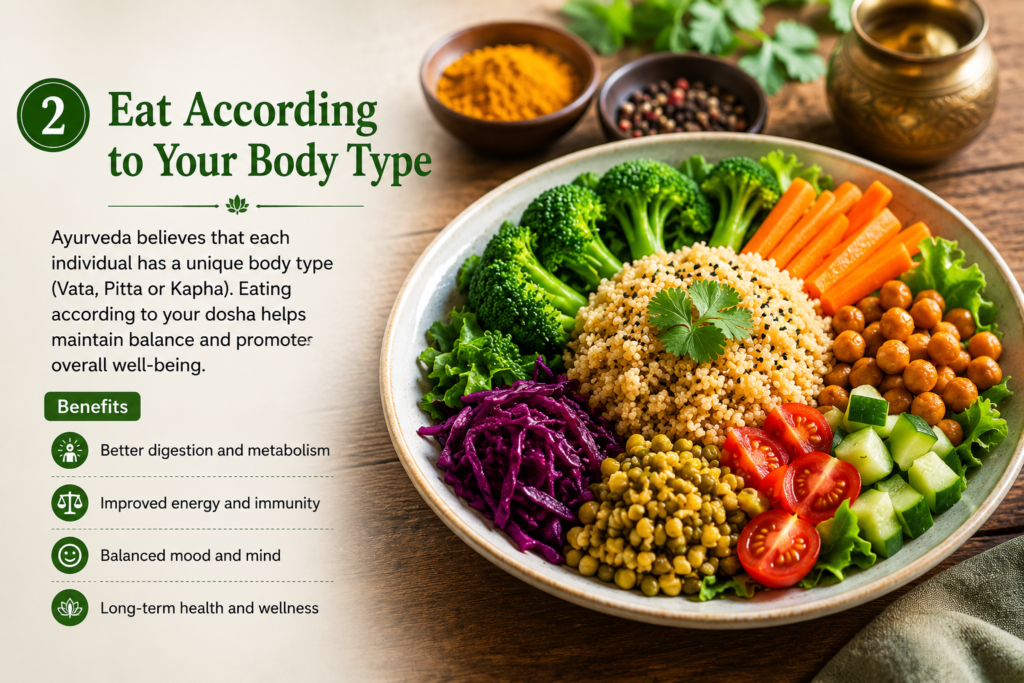
A well-known concept in Ayurveda is the idea of body constitutions called doshas. Traditional Ayurvedic philosophy describes three main doshas:
- Vata
- Pitta
- Kapha
These categories are used in Ayurvedic teachings to understand different body tendencies and lifestyle preferences.
Personalized Wellness Approach
Instead of following one diet for everyone, Ayurveda promotes personalized eating habits. Many wellness enthusiasts appreciate this flexible approach because it encourages people to pay attention to how foods make them feel.
General Ayurvedic Eating Principles
- Eat freshly prepared meals
- Avoid overeating
- Include seasonal foods
- Eat slowly and mindfully
- Maintain regular meal timings
Balanced eating habits are widely recognized as important for overall wellness and energy levels.
3. Use Natural Herbs and Spices Wisely
Indian kitchens have long used herbs and spices not only for flavor but also as part of traditional wellness practices.
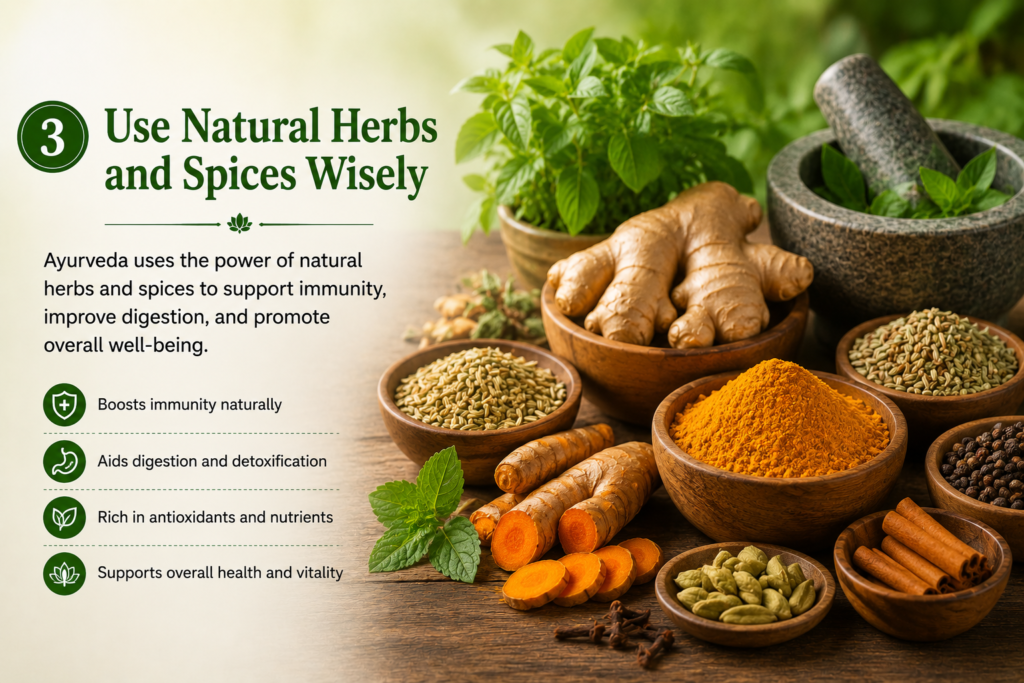
Popular Ayurvedic herbs and spices include:
- Turmeric
- Ginger
- Tulsi (Holy Basil)
- Cinnamon
- Cardamom
- Cumin
- Fennel
These ingredients are commonly used in teas, soups, curries, and warm beverages.
Turmeric: The Golden Spice
Turmeric has become globally popular in wellness culture. It contains a natural compound called curcumin and is widely used in traditional cooking.
Common Ways People Use Turmeric
- Golden milk
- Herbal tea
- Curry dishes
- Rice recipes
- Smoothies
Always use herbs and supplements responsibly and consult a qualified healthcare professional if you have health conditions or take medications.